
By Dario Betti, CEO, Mobile Ecosystem Forum
Whether we are taking photos, streaming video or running an AI-powered app, memory allows our devices to process information quickly. Memory is also required elsewhere, increasingly by the massive data centres—essentially warehouses filled with servers—that depend on vast quantities of high-performance memory to train and run AI models. These two worlds, personal devices and industrial-scale computing, are now competing for the same essential resources.
AI systems require vastly more memory per unit than consumer devices and supply chains are increasingly skewing toward meeting the needs of AI infrastructure rather than consumer electronics. As production capacity is redirected toward artificial intelligence workloads, the Dynamic Random Access Memory (DRAM) and the NAND flash memory used in smartphones and PCs are becoming both scarcer and more expensive.
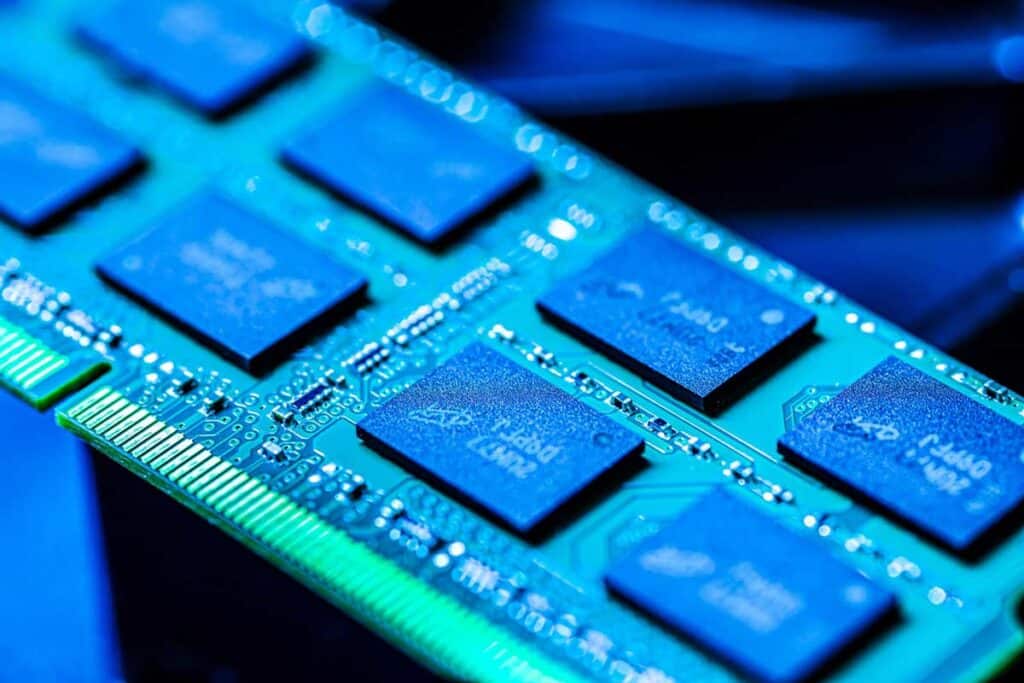
Image: Yay Images
The challenge is ultimately physical
Fabrication plants cannot maximise output across all chip types simultaneously, so every production decision carries a trade-off. As more capacity shifts toward AI memory, supply tightens for consumer electronics.
With memory manufacturers reallocating production toward high-bandwidth memory (HBM)—the specialised chips required for AI systems—International Data Corporation (IDC) has warned that the industry is facing a “structural” supply imbalance driven by AI demand, rather than a cyclical shortage. Meanwhile, Counterpoint Research has revised its 2026 global smartphone shipment forecast downward by 2.1%, citing rising memory costs.
According to IDC, in Q1 2026, global smartphone shipments fell 4–6% year-on-year as DRAM and NAND shortages disrupted supply and increased costs for original equipment manufacturers. Premium vendors with stronger supply chains are holding their ground, while volume players are being squeezed. IDC reports that price increases in some markets have reached as much as 40–50% as component shortages feed through to retail pricing.
The cost of intelligence
Memory already represents a significant share of device costs—around 15–20% of the bill of materials for mid-range smartphones—and that share is increasing as prices surge. In some cases, component costs in low-end smartphones have risen by 20–30%, forcing manufacturers to either pass costs on to consumers or reduce specifications.
PC manufacturers have already begun adjusting their pricing strategies, and smartphones are expected to follow. Analysts anticipate increases in bill-of-material costs of 15% or more. Mid-range devices may ship with less RAM, entry-level models could lose features, and flagship devices may no longer advance at the same pace.
Even the largest buyers are not insulated. Companies with scale can manage volatility through long-term agreements and purchasing power, but they remain dependent on the same constrained supply chain. Over time, those limits will become unavoidable.
For smaller Android manufacturers, the situation is more acute. They face difficult trade-offs between raising prices, reducing specifications, or withdrawing from lower-margin segments altogether.
IDC notes that vendors are already responding by reducing baseline configurations: devices that might have shipped with 12GB of RAM are now launching with 8GB at the same price point.
Ecosystem-wide impact
Developers are being forced to reconsider long-standing assumptions about performance progression. Annual gains in speed and capacity can no longer be taken for granted. Memory limits may constrain application design, and storage capacities could stagnate or even decline in certain segments.
Cloud-based AI will remain central to the user experience. While on-device intelligence offers advantages such as reduced latency and improved privacy, it is also resource-intensive. For most users, AI processing will continue to rely heavily on remote infrastructure. APIs, messaging platforms, and cloud services will therefore remain critical components of the ecosystem.
At the same time, market power is likely to consolidate further. Companies that control both hardware and supply chains will strengthen their positions, while smaller manufacturers face growing difficulty competing effectively.
The expansion of AI is not only advancing technological capabilities, it is also transforming the economic foundations of the hardware industry.
Lessons for entrepreneurs
For entrepreneurs and developers, the implications are increasingly clear. The assumption of ever-improving device capabilities is no longer reliable.
Applications must be designed to operate efficiently within tighter memory constraints or offload processing to the cloud. Scarcity is becoming a defining feature of the environment, requiring flexibility in both product design and business models.
At the same time, pricing dynamics are shifting. IDC and Counterpoint both point to rising average selling prices alongside declining unit volumes – a combination that signals a more constrained, less elastic market.
AI is effectively introducing a new cost layer across consumer electronics. Smartphones will not automatically become more powerful or more affordable with each generation.
Experiences will continue to grow more intelligent, but the devices that deliver them may evolve more slowly – leaner in design, more constrained in capability, and, in many cases, equipped with less memory than users have come to expect.

Dario Betti is CEO of MEF (Mobile Ecosystem Forum) a global trade body established in 2000 and headquartered in the UK with members across the world. As the voice of the mobile ecosystem, it focuses on cross-industry best practices, anti-fraud and monetization. The Forum, which celebrates its 25th anniversary in 2025, provides its members with global and cross-sector platforms for networking, collaboration and advancing industry solutions.
The views and opinions expressed in this blog post or content are those of the authors or the interviewees and do not necessarily reflect the official policy or position of any other agency, organization, employer, or company.
Related Posts
 By Dario Betti, CEO, Mobile Ecosystem ForumMythos is a highly advanced AI model focused on software analysis and cybersecurity, and it is causing a fa...
 By Dario Betti, CEO, the Mobile Ecosystem ForumWith the introduction of the Galaxy Z TriFold, Samsung has pushed foldable phones closer toward mainstr...
 By Dario Betti, CEO, Mobile Ecosystem Forum (MEF)Social media platform TikTok is a vast, endlessly scrolling stream of creativity, mimicry, and influe...
 By Dario Betti, CEO, Mobile Ecosystem Forum (MEF)Meta’s Threads has quietly released an option to allow all users to send direct messages to each othe...